

Medically reviewed by Dr. Nagarathnam Jetti (MBBS, DPH, DIH, FIAOH), Diabetologist
This article is written and reviewed by a qualified medical doctor and diabetologist to ensure accuracy and reliability.
What is Glycemic Index and Why Does It Matter?
The glycemic index (GI) measures how quickly a food raises your blood sugar levels. Understanding this is important for managing diabetes and maintaining stable energy levels throughout the day.
Foods with a high glycemic index raise blood sugar quickly, while foods with a low glycemic index release sugar more slowly and steadily.
Quick Answer: The glycemic index (GI) ranks foods based on how quickly they raise blood sugar levels. Foods with a GI of 55 or less are considered low GI, 56-69 medium GI, and 70+ high GI. People with diabetes often choose lower GI foods to help maintain steadier blood sugar levels.
Glycemic Index Categories
- Low GI: 55 or less
- Medium GI: 56-69
- High GI: 70 and above
How Glycemic Index Affects Your Body
- High GI foods help raise blood sugar quickly (useful during low sugar levels)
- Low GI foods help maintain stable blood sugar (ideal for diabetes control)
Important Note
The glycemic index values listed below are based on multiple sources and should be used as guidelines, not exact values.
Factors affecting GI include:
- Cooking method
- Fiber content
- Fat and protein content
- Individual metabolism
*************************************************************
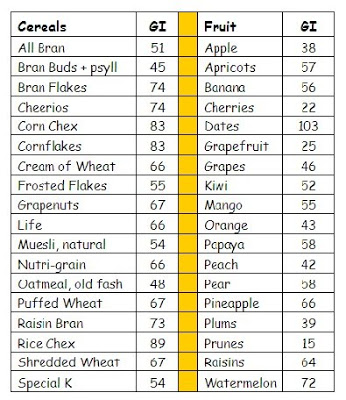
In the previous articles on Diabetes, we discussed what the Glycemic Index is and the different types of Glycemic Index. We also discussed the points one has to note on consuming food. Today I am going to list out the Glycemic Index of some of the common food that we consume.
How quickly do foods raise your blood sugar?
The glycemic index measures how fast a food is likely to raise your blood sugar. This is very useful to note as it's helpful to know which will help you maintain your blood sugar at what time. For example, when you are exercising and your blood sugar is already low, you should be eating food that will help raise your blood sugar quickly. On the other hand, there is not much activity and you want to maintain the blood sugar. So at this point in time, you got to eat something that has a lower glycemic index.
So basically higher Carbs which has higher GI help in raising low blood sugars, while slower carbs which have lower GI are helpful in preventing drops in blood sugars.
The below given figures are referred across different sources. These numbers are to be taken only as guidelines and not as the exact numbers as the effect the food has on blood sugars depends on a lot of other factors such as cooking time, fiber and fat content, etc including many more.
This is meant to help and guide only as one of the tools for a better balance!
Glycemic Index Chart of Foods
Below is a complete glycemic index chart of common foods including fruits, cereals, snacks, and beverages.
Glycemic Index of Cereals
GI of Snacks, Vegetables

Glycemic Index of Drinks, Milk & Dairy

Glycemic Index of Lentils, Baked dishes

Low Glycemic Index Foods (Best for Diabetes)
- Apple
- Cherries
- Lentils
- Milk
- Soy
- Green vegetables
High Glycemic Index Foods to Avoid
- White bread
- Cornflakes
- Potato (baked)
- Sugary drinks
- Processed snacks
How to Lower Glycemic Index of Meals
- Add fiber (vegetables, whole grains)
- Combine carbs with protein
- Avoid overcooking
- Include healthy fats
Instead of White rice only, you can try Rice + dal + vegetable curry
Instead of Bread and jam, you can try Whole wheat bread + peanut butter
Glycemic Index vs Glycemic Load
While glycemic index measures how quickly a food raises blood sugar, glycemic load also considers the amount of carbohydrate consumed. A food may have a high GI but a moderate glycemic load if eaten in small portions.
📚 Learn More About Diabetes
General Notes on Diabetes
Introduction to Diabetes ~ What Is Diabetes?
Why Early Diagnosis Is Important?
Diagnosing Diabetes ~ Different Types Of Diabetes
Dietary Aspects of the Management of Diabetes ~ Part 1
Dietary Aspects of the Management of Diabetes ~ Part 2
Uncontrolled diabetes leading to Renal Failure
Diabetes and Eye disease
Healthy Recipes for Diabetes
Appey or Paniyaram with Jowar Four
Healthy Snack with Chickpea Salad
Gooseberry Rice
Guava ~ the Wonder Fruit
Jamun Seed Powder ~ Diet for Diabetics!
Stuffed Paratha with Greens
High-Fiber Breakfast Ideas for Better Blood Sugar Control
A high-fiber breakfast may help slow the absorption of carbohydrates and keep you feeling full for longer. Some examples include millet idli, sprouted moong idli, pesarattu, adai, oats idli, and vegetable upma. Pairing these dishes with protein-rich foods such as dal, sprouts, or yogurt can further support balanced blood sugar levels.
Little Millet Idli
Sprouted Moong Idli
Thalipeeth
You can check my collection of Millet Recipes for more ideas on cooking with millets.
Consume more sprouts in your food by including it in different ways by using these sprouted recipes
Frequently Asked Questions on Glycemic Index
Low glycemic index (GI) foods are those with a GI of 55 or less and help maintain stable blood sugar levels. These include non-starchy vegetables, legumes like lentils and chickpeas, whole grains such as oats and barley, and fruits like apples, berries, and citrus.
No, bananas are not high GI. They are usually classified as low to medium GI (42-55). Unripe bananas have a lower GI, while ripe bananas have a slightly higher GI due to increased sugar content.
The best Indian foods for diabetes are low GI, high-fiber, and nutrient-dense. These include millets (ragi, jowar, bajra), legumes (moong dal, chickpeas), leafy greens, bitter gourd, and spices like turmeric and cinnamon.
Yes, cooking can increase the glycemic index of foods. Methods like boiling or steaming break down starches, making them easier to digest and causing a faster rise in blood sugar levels.
👨⚕️ About the Author
Dr. Nagarathnam Jetti, MBBS, DPH, DIH, FIAOH is a medical doctor and diabetologist with extensive experience in managing diabetes and metabolic health. This guide is shared to help readers make informed dietary choices for better blood sugar control.
Vegetarian Zest says
I'm so glad that i found your blog. I'm a diabetic and 27 years old. I recently found about it. Good to read the articles.
Sandhya Karandikar says
I found this old post today. I am diabetic and have read a lot of material on it. Most of the food stuff that are shown in the glycemic index are western foods. Is there some index that shows the glycemic index of Indian grains and foods that are used commonly in Indian homes.